
What Is a Fine Material Washer?
How Sand Screws Wash, Classify and Dewater Aggregate
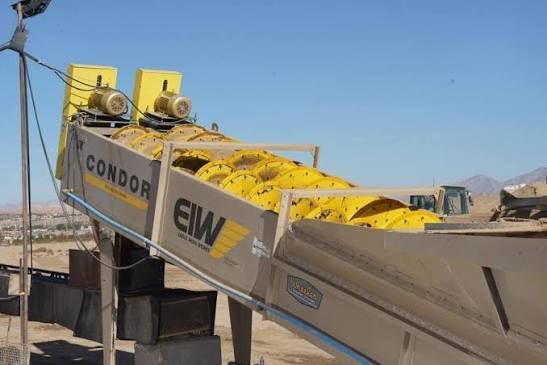
Producing a consistent sand product requires more than simply separating material by size. Depending on the feed and the desired end product, fine aggregate may also need to be washed, classified and dewatered before it is ready for stockpiling or use.
A Fine Material Washer, often referred to as a sand screw, combines these functions in a single piece of processing equipment. Commonly used in sand and aggregate applications, Fine Material Washers use water and a rotating screw shaft to process fine material while helping remove unwanted fines and excess moisture.
Eagle Iron Works manufactures Fine Material Washers in both single and double screw configurations for a range of production requirements. Understanding how these machines operate can help producers determine where a Fine Material Washer may fit within a washing circuit.
What Does a Fine Material Washer Do?
Fine Material Washers are designed to perform three primary functions: washing, classification and dewatering.
Material and water enter the washer through the feed box and move into the washer tub. As the screw shaft rotates, the material rolls and tumbles within the water. This movement creates particle-on-particle attrition that can help remove deleterious coatings from the aggregate.
Water also plays an important role in classification. Lighter and finer particles can be carried toward the overflow while the desired sand settles into the tub. The screw then conveys the settled material up the inclined portion of the washer toward the discharge.
As the material travels upward, free water drains away, helping produce a dewatered product for discharge and stockpiling.
How Classification Takes Place in a Fine Material Washer
Fine Material Washers use hydraulic separation to influence which particles are retained and which leave the machine with the overflow.
On Eagle Iron Works Fine Material Washers, adjustable-height weirs allow operators to control overflow conditions. Setting the weirs level creates a lower overflow velocity to promote greater material retention. Adjusting the weirs to increase overflow velocity can create a coarser hydraulic separation.
This adjustability allows the washer to be configured around the desired product and application rather than treating every feed material the same way.
Screw speed is another important consideration. Fine sands generally require slower shaft speeds to provide additional time for dewatering and material retention. Because reducing screw speed also reduces throughput capacity, feed gradation and production requirements should be considered when sizing and operating a Fine Material Washer.
Single vs. Double Fine Material Washers
Eagle Iron Works offers both single and double screw Fine Material Washers.
The basic washing, classifying and dewatering principles are similar, but the appropriate configuration depends largely on the capacity requirements of the application. Double screw machines provide additional processing capacity for operations that need to handle greater tonnage.
Choosing between configurations should therefore be based on the complete application rather than machine size alone. Factors such as feed tonnage, silt content, water requirements, desired fine sand retention and product gradation can all affect Fine Material Washer selection and performance.
Built for Aggregate Washing Applications
Fine Material Washers operate in an abrasive environment, making component design and wear protection important considerations.
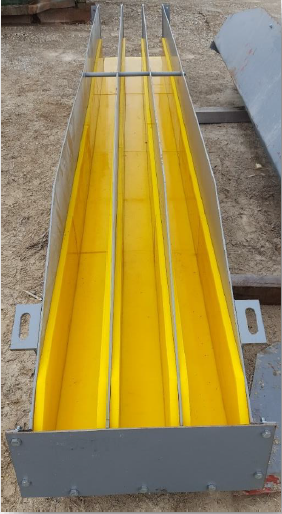
Eagle Iron Works Classic Fine Material Washers incorporate a heavy-duty gear reducer with heat-treated helical gears and triple-reduction gearing. EIW also offers multiple wear-shoe materials, including standard white iron alloy, Eagle Armor iron alloy and optional polyurethane.
The washer tub incorporates a full-length close-clearance curved plate, adjustable weirs and wide side flares designed to aid product retention. The feed box uses internal and external baffles to reduce incoming feed velocity and promote a more uniform slurry entering the washer.
These features work together to support the washing, classification and dewatering process while accommodating the demanding conditions found in aggregate production.
The Eagle Iron Works 66x35 Double Fine Material Washer
For higher-capacity applications, Eagle Iron Works offers a 66-inch by 35-foot Double Shaft Fine Material Washer.
According to current Eagle Iron Works specifications, the 66x35 double-shaft model has a maximum rated capacity of 800 short tons per hour. The machine uses two 60-horsepower electric motors and operates at a listed shaft speed of 11 RPM at full speed.
The actual production capacity of a Fine Material Washer depends on the application. Material gradation, desired fine-material retention, water requirements and required screw speed can all influence operating capacity.
For operations evaluating a large double-screw sand washer, understanding these application requirements is an important part of determining whether a 66x35 unit is the right fit.
Eagle Iron Works 66x35 Fine Material Washer Available at KastRock
KastRock currently has an Eagle Iron Works 66x35 Double Fine Material Screw Washer available for sale.
Equipment selection should always be based on the requirements of the individual application. The KastRock team can provide additional information about the available unit and help determine whether its configuration is appropriate for your operation.
Contact KastRock to learn more about the available Eagle Iron Works 66x35 Double Fine Material Screw Washer.

Share On: